The Monsters on the Moor: An Autopsy of Evil
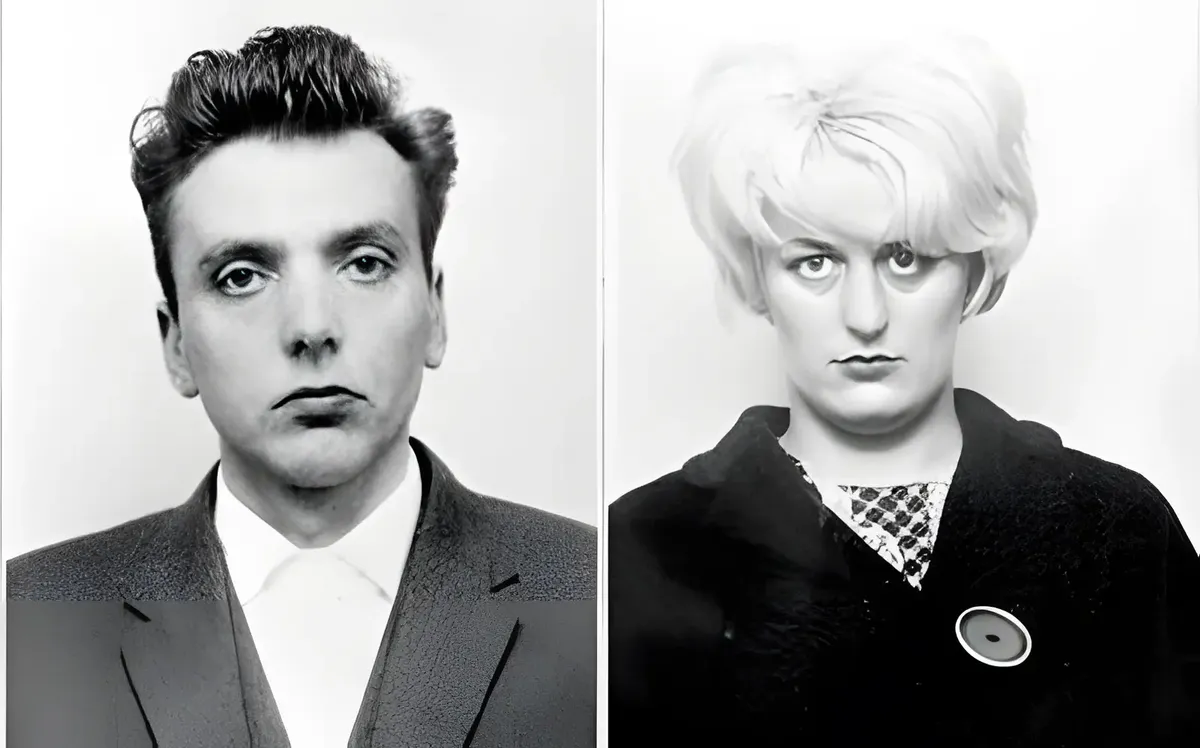
This is not a "true crime" story. I'm not here to indulge in the grubby, titillating details that the tabloids have dined out on for sixty years.
This is an autopsy report.
The Moors Murders are not just a crime. They are a line in the sand. They are the fixed point in 20th-century British history where the black-and-white, post-war world of Coronation Street, council houses, and leaving your door unlocked died, and something new, modern, and incomprehensibly evil was born.
I was eleven years old in 1965. When the news broke, it was a distant, adult horror. It didn't stop us kids from playing out until dark. I don't think it even occurred to my parents to lock the door. There was a universal, unspoken belief: "It couldn't happen to us." That was the world they killed.
When Ian Brady and Myra Hindley were arrested, the public couldn't grasp it. People understood murder: husbands killed wives, robberies went wrong. But this? Kidnapping and murdering children for fun?
As the writer Chris Cowley put it, this was "beyond the comprehension of the workaday neighbours who were more interested in how they were going to pay the gas bill."
That is the absolute, stone-cold truth. And it's why they got away with it for so long.
The Pair: A Psychopath and His Acolyte
To understand the murders, you have to understand the pair. They were not raving lunatics. They were worse. They were banal. They were just two clerks who worked at a chemical distribution company in Gorton, Manchester.
Ian Brady was the classic "angry young man," a Glaswegian petty criminal steeped in a swamp of self-pity and intellectual pretension. He was a stock-room clerk who spent his evenings reading Mein Kampf, works by the Marquis de Sade, and books on Nazi atrocities. He was a psychopath who saw himself as a Nietzschean "superman," a being who was above the pathetic, everyday morality of the "workaday" people he despised.
Myra Hindley was his creation. She was a typist, infatuated with the "quiet, short-tempered" man who gave her books to read. She was the one who, in her own words, was convinced by Brady that "there was no God at all." She was the one who bleached her hair blonde to emulate an "Aryan ideal," who wore the leather jackets, and who bought the guns.
And she was, without question, the more monstrous of the two.
She was the "honeypot." She was the one who hired the van. She was the woman who would ask a 10-year-old girl to help her with her shopping, or ask a 12-year-old boy to help her find a "lost glove." She was the "sister" who smiled and offered a lift home.
Brady was the psychopath. But Hindley was the betrayal. She was the living, breathing perversion of motherhood and safety. She was the one who held their hands on the way to the grave.
The "Philosophy": The Ultimate Act of Small-Minded Grandiosity
For Brady, this was not just about violence or sexual gratification, though both were present. He called it an "existential exercise." In reality, it was the ultimate act of pathetic, small-minded grandiosity by a man who confused reading books with understanding them.
He and Hindley were obsessed with a book (and film) called Compulsion, a fictionalised account of the Leopold and Loeb case from the 1920s. That case involved two wealthy, intelligent young men who decided to commit the "perfect murder" just to prove they were "supermen" who could get away with it.
That was the blueprint. The murders of Pauline Reade, John Kilbride, Keith Bennett, and Lesley Ann Downey were not crimes of passion. They were a project.
They photographed their hunting ground on Saddleworth Moor. They took pictures of Hindley, with her dog Puppet, posing nonchalantly on the freshly-dug graves of their victims.
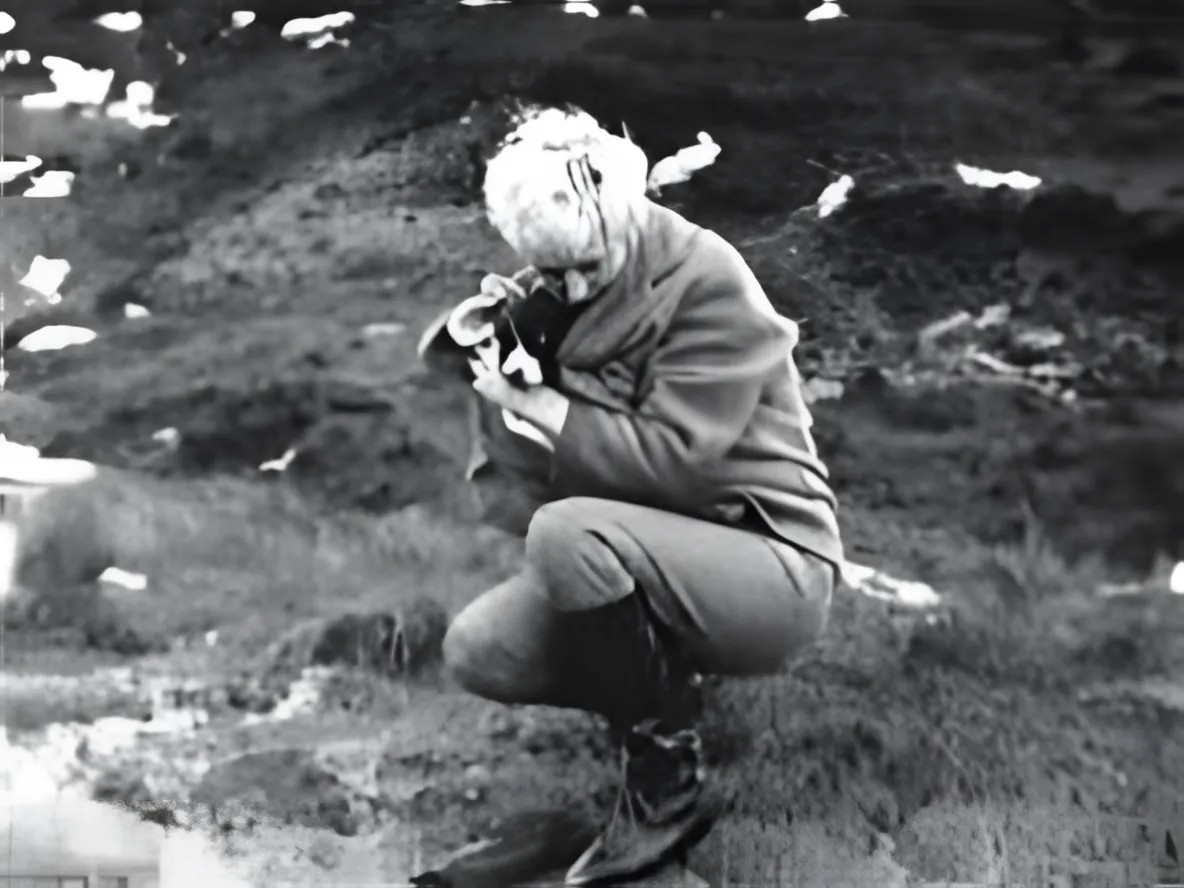
Hindley at John Kilbride's grave on Saddleworth Moor
And, in the case of 10-year-old Lesley Ann Downey, they recorded her. The sixteen-minute audiotape of her pleading, crying, and screaming for her mother, while Brady and Hindley's voices are heard, cold and disinterested, is perhaps the single most horrific artefact in British criminal history.
This is what sets them apart. It wasn't just murder. It was murder as art, as trophy-hunting, as a philosophical "work."
The Collapse: The "Perfect Murder" Goes Wrong
For two years, they were invisible. They were just the quiet couple from the Hattersley overspill estate.
Then they got sloppy. They got arrogant.
On the 6th of October 1965, Brady lured 17-year-old Edward Evans back to their house. He didn't just kill him; he wanted an audience. He sent Hindley to fetch her 17-year-old brother-in-law, David Smith.
Smith was a local lad, a bit of a tearaway, and Brady had been "cultivating" him, trying to impress him with his books and his talk of robbery. That night, Smith was brought to the house, heard a "hell of a scream," and ran into the living room to see Brady standing over Evans with a hatchet.
He watched, paralysed, as Brady and Hindley (by his account) finished the job, throttling Evans with an electrical cord. Brady, the "superman," even sprained his ankle in the struggle.
Brady then asked Smith, who was now a witness to a murder, to come back the next morning to help him dump the body on the moor. It was the single stupidest, most arrogant miscalculation of his life.
Smith went home, white with terror, and told his wife (Myra's sister) everything. At 6:10 AM, he armed himself with a bread knife, went to a phone box, and called 999.
The Unveiling: The Suitcases at the Station
The "autopsy" of their lives began. When police arrested Brady, he was calmly writing a letter to his employer about his "ankle injury."
The real break came from David Smith, who mentioned that Brady had a "thing about railway stations." Police searched the left-luggage offices and, at Manchester Central, they found the suitcases.
Inside was the toolkit of their "existential exercise." The guns, the pornographic photos, the notes. And the photos of Saddleworth Moor.
And, of course, the tape. The sixteen-minute recording of Lesley Ann Downey.
I cannot imagine the horror of being the detective who had to sit in a quiet room, press "play," and listen to that. That tape, played in open court, is what sealed their fate. It's what ensured that "Myra Hindley" would become a name synonymous with pure, feminine evil.

The area of Saddleworth Moor where Hindley and Brady buried their victims
The photos of the moor were the map. Hindley's dog, Puppet, was in many of them. In a moment of grim, procedural genius, police had a vet examine the dog to determine his age, which allowed them to date the photographs. (The dog, Puppet, died under anaesthetic. Hindley, who had shown no emotion for her human victims, was reportedly furious, accusing the police of "murdering" her dog).
The photos, combined with the local knowledge of 11-year-old Patricia Hodges (a neighbour Hindley had chillingly taken on "peat-collecting" trips to the moor), led police to the graves of Lesley Ann Downey and John Kilbride.
The Farce: A Trial and a Lifetime of Lies
The trial was a formality. Brady was arrogant and pedantic. Hindley was "quiet, controlled, impassive" and, as the judge said, "lied remorselessly." She claimed she was in the bathroom when Downey was killed, or looking out the window, or running a bath.
Both were sentenced to life. The death penalty had been abolished just six months earlier.
And so began the second act: the long, 60-year "aftermath" that kept them in the public eye.
Brady, diagnosed as a psychopath, was sent to Ashworth, a high-security psychiatric hospital. He spent his time writing his disgusting book The Gates of Janus, complaining about the food, and going on hunger strikes, demanding the "right to die." He was, until the end, a petulant, narcissistic child trapped in a monster's body.
Hindley, meanwhile, began her great "performance." Seeing a path to possible parole, she, the "most evil woman in Britain," suddenly claimed to be a reformed Catholic. She had her supporters, most notably Lord Longford, who was relentlessly derided as a "loony" for believing her act.
This is the part that still grates. For twenty years after the trial, both of them denied everything. They denied the murders of Pauline Reade and Keith Bennett. They sat in prison, in silence, while the mothers of those children lived in a private hell, not knowing if their children were dead or had just run away.
It was only in 1985, when Brady allegedly "confessed" to a journalist, that the investigation was re-opened. Hindley, seeing that Brady might "co-operate" and reap the public benefit, finally decided to confess too.
What followed was the grotesque spectacle of flying a "reformed" Myra Hindley, in a helicopter, back to Saddleworth Moor to "help" the police. She led them, eventually, to the grave of Pauline Reade.
But she never found Keith Bennett.
The Open Wound: "He's Still Out There"
And that is the real legacy of this crime. It's not just what they did. It's what they refused to undo.
Keith Bennett, 12 years old, is still out there.
His mother, Winnie Johnson, spent 48 years of her life visiting the moor, waiting for the one piece of information that would let her bury her son. She wrote to Hindley, begging her for help. Hindley wrote back, thanking her for her "sincerity."
Winnie Johnson died in 2012, still not knowing.
Brady died in 2017. He, too, refused to give up the secret.
Even as recently as 2022, police were digging up the moor again, based on a "tip" from an amateur sleuth, only to find nothing.
That is the true "autopsy" of this case. Brady and Hindley didn't just murder five children. They murdered the families, slowly, over decades. And in the case of Keith Bennett, they have never allowed the funeral to be held.
These weren't "monsters" in the fictional sense. They were two, banal, narcissistic, evil human beings who worked in an office.
And that's the most terrifying truth of all.