We Are All Rankers Now: Or Why the Internet Has Turned to Shit
I almost posted a comment on a Medium article this morning.
The comment was: "This kind of advice is why the internet has turned to shit."
I didn't post it. Not because it was wrong, but because the article didn't deserve it. It was excellent. Genuinely useful. The kind of piece that makes you think rather than just nod.
Read the SERP before you write. Understand intent. Find the thinking gap. Look for what the top results quietly stepped around and write that instead.
Good advice. Practically sound. The author clearly knows what they're doing.
But I couldn't shake the feeling that something had gone wrong somewhere upstream.
The Premise
The article was about keywords. Specifically, about finding "exploitable" ones. About understanding "conversion paths" and "audience assets" and the difference between a keyword difficulty of 19 and one of 41 and why the numbers don't tell the whole story.
All true. All useful.
And all completely beside the point of why anyone ever started writing anything.
The article treats writing as an optimisation problem. Find the gap in the market. Serve the intent. Build the audience. Convert the traffic. The writing itself is a means to an end, a vehicle for ranking, a mechanism for conversion, a digital employee working while you sleep.
Nobody in the article is just trying to say something.
The Internet I Remember
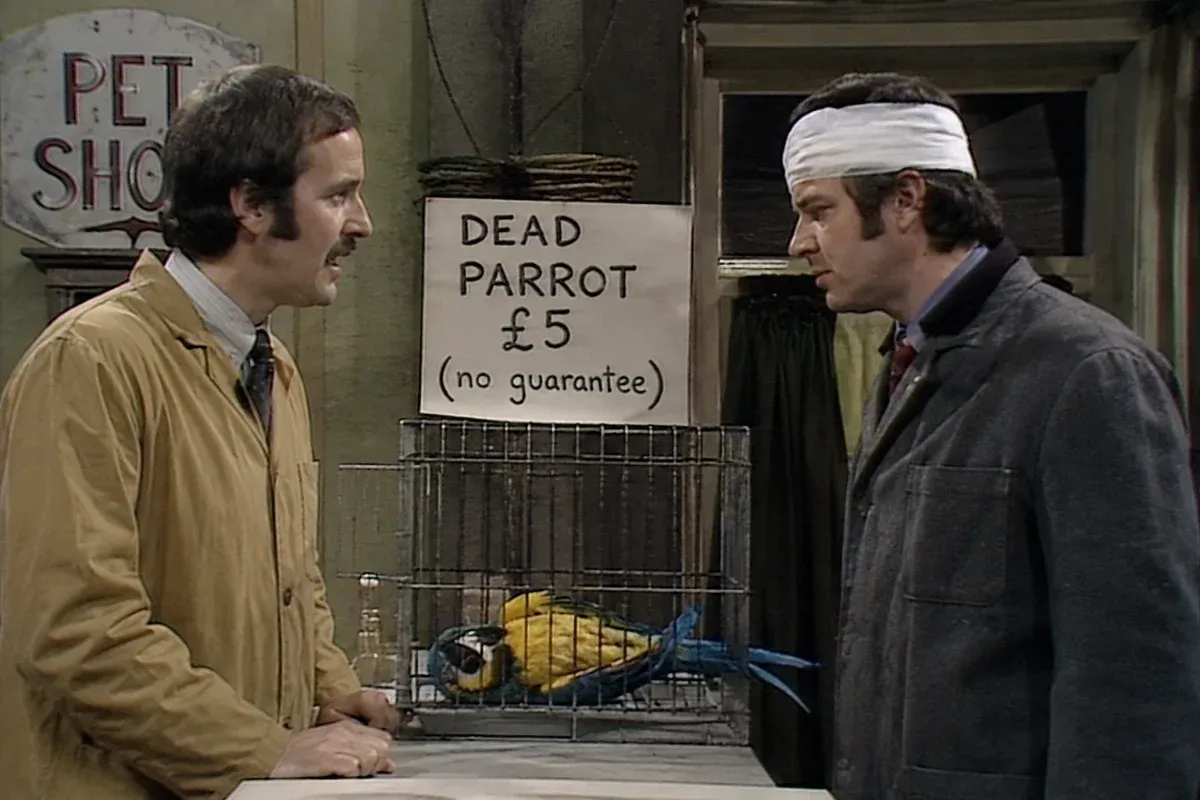
I got online in the mid-1990s via a 2400 baud modem and a phone bill that made my wife wince. One of the first things I found was the script of Monty Python’s Dead Parrot sketch on a server in Australia. Someone had put it there because they wanted other people to be able to read it. There was no conversion path. There was no audience asset. There was just a person who thought something was worth sharing.
That was the internet before it became an industry.
People wrote things because they had something to say. They built websites because they wanted a corner of the network that was theirs. They shared because sharing was the point, not because sharing drove traffic to a funnel.
I am aware this sounds like an old man complaining that music was better before it went commercial. Perhaps it is exactly that.
But the feeling persists.
What Happened
The advice in that article is not the cause of the problem. It is the response to it.
The problem is that writing which isn't optimised simply doesn't get read any more, not because it isn't good, but because the platforms that distribute writing have been engineered to reward optimisation over quality.
Google ranks backlinks and intent alignment.
Medium promotes what gets read to completion and generates follows.
Pinterest surfaces pins that convert.
Facebook serves content that generates engagement.
None of these systems were designed to find the best writing. They were designed to find the most effective writing, effective meaning clicked, shared, followed, subscribed to, converted.
The writers who figured this out adapted. The ones who didn't got buried on page four with a keyword difficulty of 19.
The advice is correct for the internet as it exists.
That is precisely the problem.
My Own Situation
I should be honest here. I have not optimised anything.
I write on BearBlog because it's fast and clean and costs nothing beyond a lifetime subscription I've already paid. I post on Reddit because the readers there are self-selected and engaged. I submitted something I'd written to Hacker News once and it sent me 138 visitors over three months, which is the closest I've come to a traffic strategy.
My BearBlog traffic logs show that most of my readers arrive via Kagi, which is a search engine used by people who pay specifically to avoid algorithmically manipulated results. They find me because I wrote something worth finding, not because I found an exploitable keyword.
This is either a principled position or a lucky accident. Possibly both.
What I can tell you is that the writing feels different when you're not thinking about conversion paths. You write toward the thing you actually want to say rather than toward the gap in the market. Sometimes nobody reads it. Sometimes it finds exactly the right person through exactly the right channel.
That is not a strategy. It is, however, how writing used to work before it became content.
The Exhaustion
The internet feels tired because most of what's on it was written for an algorithm rather than a reader.
The SEO article optimised for "exploitable keywords." The productivity piece invoking Seneca to justify batching emails. The wellness content dressed in ancestral wisdom. The Facebook ads written by nobody for everyone. The Medium posts formatted for scroll depth and read completion rather than thought.
All of it technically correct. All of it optimised. All of it quietly exhausting to read because you can feel the mechanism underneath.
The KINGWrites piece I almost commented on is better than most of this. It has actual thinking in it. The author reads SERPs like a writer rather than a ranker, which is the point of the whole article and also the thing that makes it slightly sad.
Reading like a writer in order to rank better is not the same as writing.
It is a very sophisticated form of not writing.
The Quiet Counter-Argument
I am aware that the internet I'm describing, the one where people wrote things because they had something to say, was also smaller, harder to find, and mostly read by other people who were already online and technically inclined.
The democratisation of writing required platforms. The platforms required business models. The business models required optimisation. The optimisation required advice like the article I almost commented on.
This is not a conspiracy. It is just how things scale.
But scale has a cost, and the cost is that the mechanism becomes visible. You can feel it in most of what you read. The intent behind the words is not communication. It is conversion.
We are all rankers now.
Most of us, anyway.
Some of us are still just talking.